
Cedar Siding Coverage & Lineal Foot Calculator
What This Cedar Siding Calculator Does
Our Cedar Siding Coverage & Lineal Foot Calculator Converts Square Feet, Linear Feet, and Board Feet. Sq Ft ↔ Linear Ft requires face width. Board Feet uses thickness × width × length. Helps estimate Western Red Cedar Siding coverage and exposure for your specific project.
Square Feet ↔ Linear Feet
Board Feet Calculator
Square Feet ↔ Board Feet
Converts area ↔ volume using thickness. Width/length don’t matter for this conversion.
Quick Reference
LinearFt = (SqFt × 12) / FaceWidthIn
BF (per piece) = (T(in) × W(in) × L(ft)) / 12
BF (total) = BF(per piece) × Qty
BF = (SqFt × ThicknessIn) / 12
SqFt = (BF × 12) / ThicknessIn
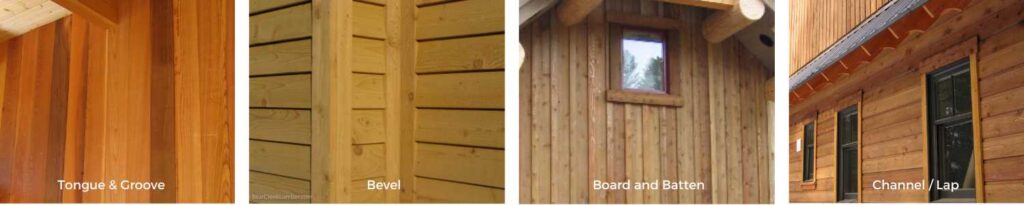
Cedar Siding Profiles
Common Cedar Siding Estimating Mistakes
Using full board width instead of exposure
Most material shortages don’t start in the field, they start in the estimate.
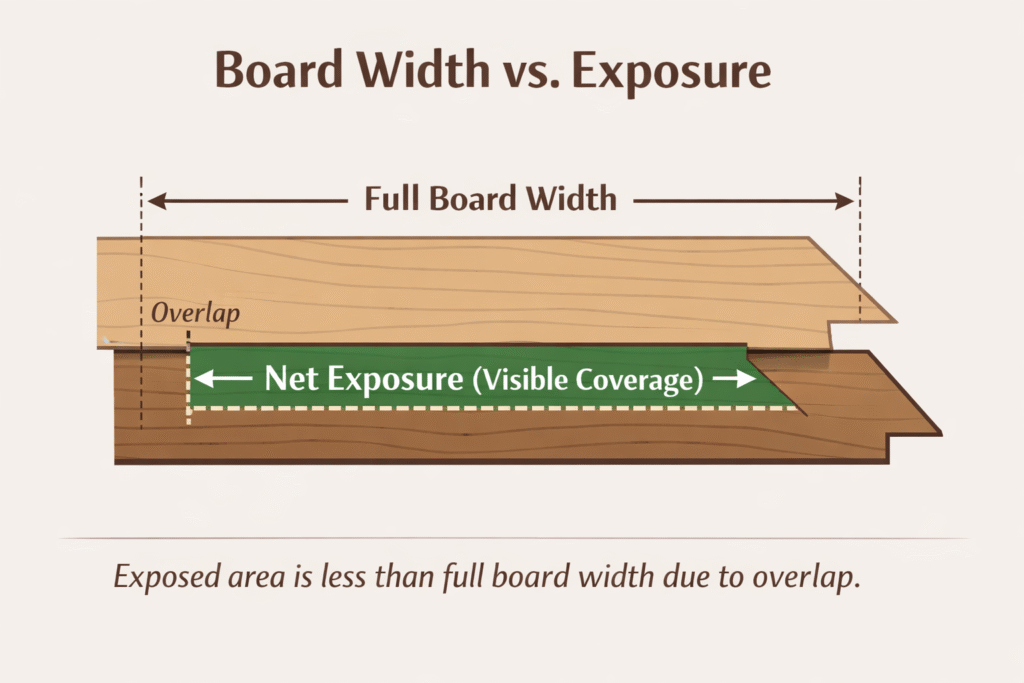
Note our “Board Width vs. Exposure” diagram is not decorative. It is risk control.
When someone calculates siding based on full board width instead of net exposure, they under-order. That leads to jobsite delays, mismatched batches, rushed substitutions, and compromised design intent. Exposure is the visible portion after overlap. It is smaller than the board’s actual width. That difference is where planning errors happen.
For builders, this is callback prevention.
For architects, this protects specification integrity.
For homeowners, this prevents mid-project stress.
Forgetting waste
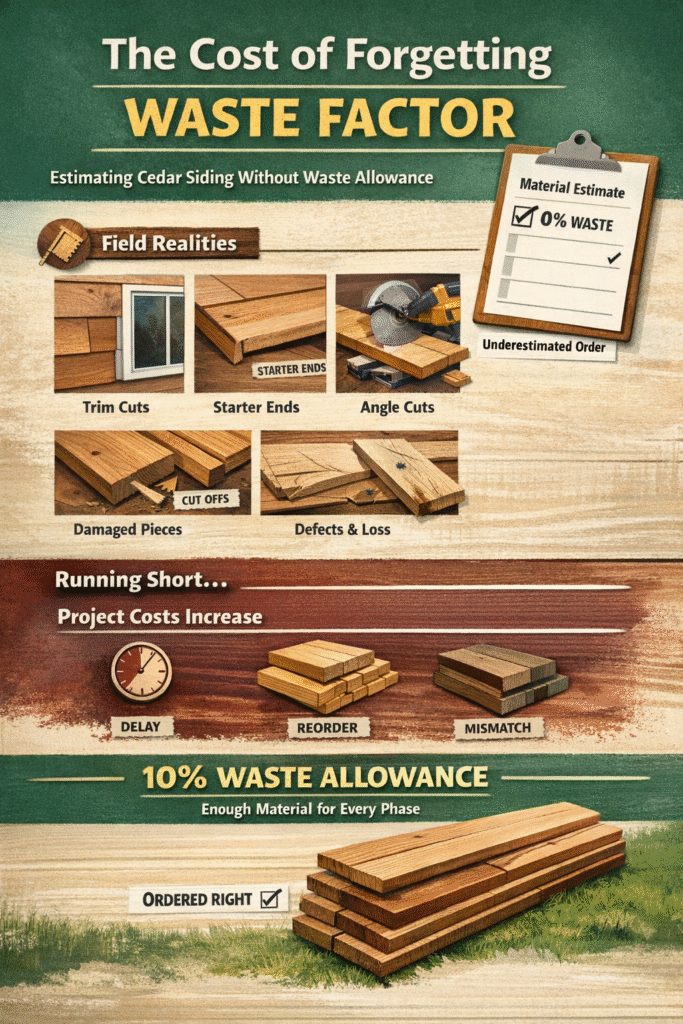
Forgetting the waste factor is one of the fastest ways a builder unintentionally under-orders cedar siding.
On paper, the square footage may look clean. The exposure math may be correct. The lineal footage may be precise. But construction sites are not spreadsheets.
Every cut at a window.
Every outside corner.
Every starter strip.
Every board that must be trimmed for layout alignment.
Each one reduces usable material.
Without a waste allowance, the estimate assumes 100 percent efficiency. That does not exist in field conditions.
Cedar siding is installed in courses. Courses must align visually across elevations. That alignment often forces cuts that are structurally sound but unusable for the next run. Off-cuts accumulate. Those off-cuts are waste—even when they are technically still wood.
This is why a baseline waste factor is standard practice. It protects:
• Schedule integrity
• Batch consistency
• Finish continuity
• Client expectations
Ignoring starter courses
Ignoring starter courses creates a silent estimating error that compounds across the entire elevation.
A starter course is not decorative. It establishes the first visible line of siding and determines how every subsequent course aligns. In bevel cedar siding, the starter strip is often ripped from full boards or installed as a separate piece to create the proper angle and reveal. That material is consumed but not fully visible.
If a takeoff calculates only exposed surface area, it assumes every board installed contributes full net coverage. The starter course does not. It absorbs material before full exposure begins.
That gap between theory and installation is where under-ordering begins.
On a modest elevation, the starter course alone can account for several additional lineal feet. Across multiple elevations, that becomes measurable inventory. On larger homes with complex detailing, the impact grows.
From a builder’s perspective, the consequences are operational:
- Mid-project reorders
- Potential lot variation
- Schedule pressure
- Substitution risk
From an architectural standpoint, starter alignment affects shadow lines, reveal consistency, and visual rhythm. If material runs short and replacement stock differs slightly in tone or grain, the bottom third of the elevation can visually separate from the upper courses.
That outcome undermines design intent.

Not accounting for layout
Not accounting for layout is one of the most subtle estimating failures — and one of the most expensive.
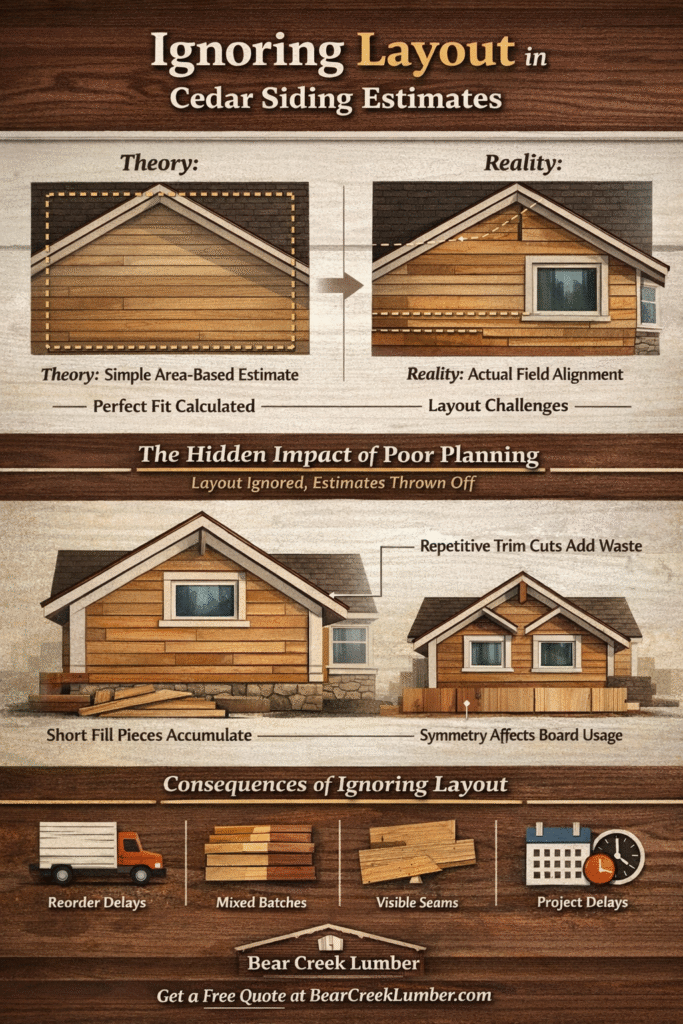
On paper, a wall is a rectangle. In reality, it is a sequence.
Windows interrupt courses.
Corners require staggered joints.
Gables shift alignment.
Trim details consume usable lengths.
An estimate based only on total square footage assumes boards can be installed continuously with perfect efficiency. That does not reflect how siding is actually installed.
Cedar siding runs in horizontal courses. Those courses must align visually across elevations. When layout is ignored, off-cuts increase. Short pieces accumulate. Boards that are technically usable become aesthetically unusable because joint placement would compromise appearance.
Layout affects:
- Course alignment
- Joint spacing
- Board length efficiency
- Starter and termination points
If a project requires symmetry around windows or alignment with architectural elements, boards often need to be cut to preserve visual rhythm. Those cuts reduce yield. That reduction must be anticipated.
Frequently Asked Questions about Cedar siding Estimates
How accurate is this cedar siding estimate?
This calculator provides a planning-level estimate based on net face coverage (exposure), total square footage, and waste percentage.
Final material quantities should be confirmed after reviewing:
• Window and door openings
• Trim details
• Course alignment
• Profile selection
• Installer preferences
For custom homes and architectural projects, early material discussions improve estimate accuracy and reduce field adjustments.
Cedar Siding Calculator FAQs
Lineal feet are calculated using net face coverage (exposure). Formula: Lineal Feet = (Square Feet × 12) ÷ Exposure (inches). Exposure is the visible portion of the board after overlap.
Net face coverage is the portion of the siding board that remains visible after installation. For bevel siding, exposure is less than the full board width due to overlap between courses.
Using full board width instead of exposure underestimates the total material required. Accurate takeoffs depend on visible coverage, not nominal or actual board width.
Many projects begin with 10% waste as a planning baseline. Complex layouts, numerous windows and doors, or tight architectural detailing may require additional overage.
Once you know total lineal feet required, divide by your selected board length. Always round up to ensure sufficient coverage and account for field cuts.
Yes. Enter the net face coverage after accounting for the joint profile. Tongue and groove and shiplap products typically have reduced net coverage compared to nominal width.
Architects should confirm exposure assumptions during design development. Early specification of profile, grade, and exposure reduces substitution risk and protects design intent.
Related Resources


Planning a Western Red Cedar Siding Project?
Material decisions made early determine how a project performs years later.
Western Red Cedar is often specified at the design stage because exposure, layout, fastener selection, and finish compatibility all influence long-term results. When those conversations happen late, options narrow. Substitutions increase. Lead times tighten. Design intent can erode under schedule pressure.
Early planning protects alignment between architect, builder, and supplier. It clarifies species selection, confirms application suitability, and reduces unnecessary overage or mid-project adjustments. It also ensures that lumber is milled, graded, and delivered according to the realities of the build cycle—not reacting to them.
A quote at the right time is not a commitment. It is a planning tool.
If elevations are drafted, square footage is estimated, or timelines are forming, this is the appropriate stage to begin the material conversation.